
Our Finish First methodology enables world class design and manufacturing engineers to approach metal finishing challenges from the beginning, as an advantage in the design and prototyping stage.
Explore finish first
Download your free copy of our technical guide to learn how electropolishing helps the food industry meet regulatory standards and sanitation requirements including benefits for food processing and packaging, food service and display, and consumer products.
Download GuideBacterial adhesion to equipment in the food production industry is an ongoing and dangerous threat, with the potential to transmit serious illnesses from food-borne pathogens. Read our whitepaper to learn why electropolishing creates the most passive, pathogen-resistant surfaces.
Download whitepaper

In one test of metal finishing processes conducted by the poultry and meat processing industry, electropolishing was found to be more effective than mechanical polishing, grinding, or sand blasting for increasing resistance to bacterial attachment.

When bacteria accumulates on metal parts, it becomes increasingly difficult to remove through normal chemical washing. A smooth, electropolished surface finish improves the ability to keep the processing equipment free of contaminates such as Salmonella.

Electropolishing brightens and cleans parts like welded wire racks that are used in various applications from meat processing to commercial ovens. The process removes the discoloration in heat affected zones (HAZ) and greatly improves corrosion resistance by fixing precipitation left behind by welding.


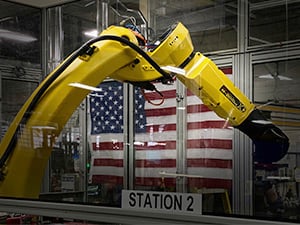
State-of-the-Art Automation for Customized, Consistently High-Quality ResultsRead Post »
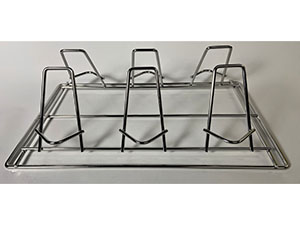
Electropolishing Helps Wire Products Company Outshine the CompetitionRead Post »
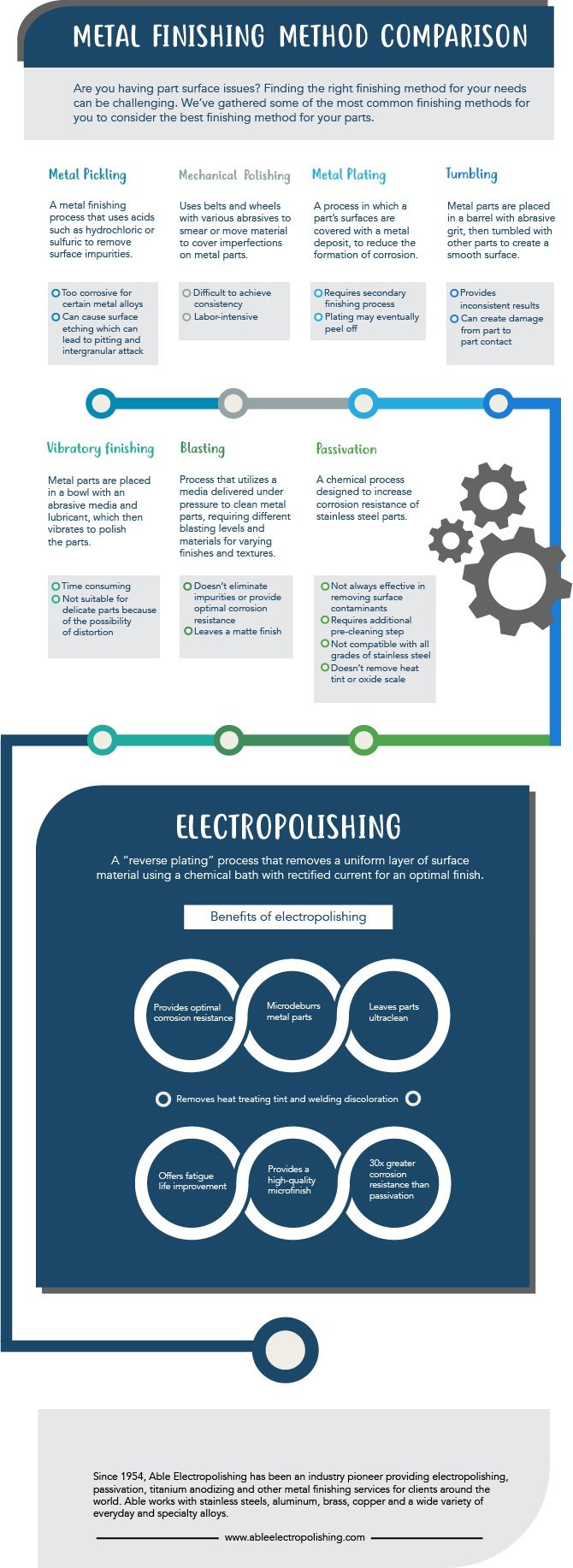
Choosing the Right Finishing Method for Metal Part ProblemsRead Post »
Why Choose Able Electropolishing Over Other ElectropolishersRead Post »

In an undertaking as meticulous and methodical as electropolishing and passivation, it’s important to get the details right. That includes meeting the criteria established by outside standard-setting bodies that ensure the highest-quality materials and parts for critical industries like pharmaceuticals,…

Passivation is an essential finishing process enhancing the durability and efficacy of metal parts in industries with no room for error, such as medical device manufacturing. Critical to ensuring that medical devices perform reliably over time, passivation uses a specialized…

Among the most demanding surface finish requirements of any industry, the specifications, standards and quality assurance processes that cover components used by the semiconductor industry impose metal finishing criteria that leave nothing to chance.

Crafting aerospace components demands precision down to the microscopic level. Through meticulous removal of contaminants and enhancement of corrosion resistance, metal finishing techniques such as passivation help ensure part performance and longevity.


